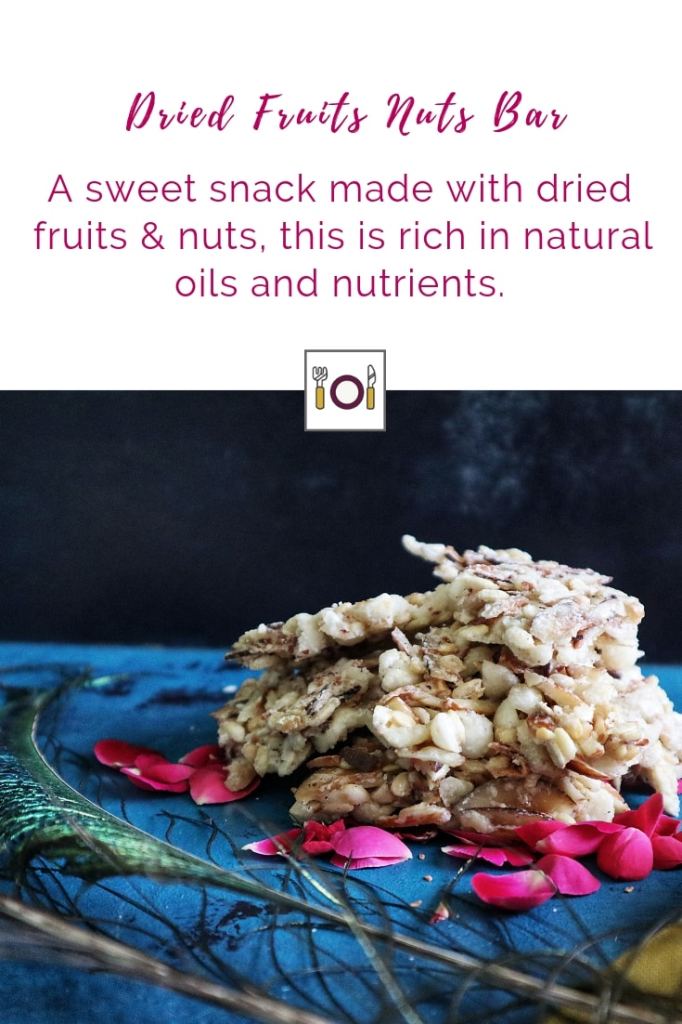
Mewe ka Paag | Dried Fruit-&-nut Bar
Spot a festival marked on the calendar and I immediately start grilling my mother about the food. The latest conversation went something like this…
Me: Maa! It’s Janmashtami on September 3. What’s special on the menu for the day?
Maa: Hmmm… I could make payesh but then you are lactose intolerant so…
Me: Okay. What else?
Maa: Your grandmother made delicacies when we were kids but we never observe Janmashtami with much fervour so I’ve never bothered.
Me: But Maaaaa………….
Maa: Go ask Verma aunty; they celebrate Janmashtami every year, I’m sure she’ll cook up something special.
And boy, was she right!
Verma aunty – our front-door neighbour, Maa’s BFF and a brilliant cook – rattled off a list of dishes that had my eyes popping out in surprise!
“All of that sounds pretty intense. Can you teach me something simple? I don’t want to labour over the kitchen fire,” I requested, sending her into peals of laughter.
“Mewe ka paag is your answer then,” said Verma aunty.
Ingredients please, I prompted, starting the list myself with mawa (khoya). “ Rapti, mewa and mawa are two different things,” aunty immediately said.
What!?
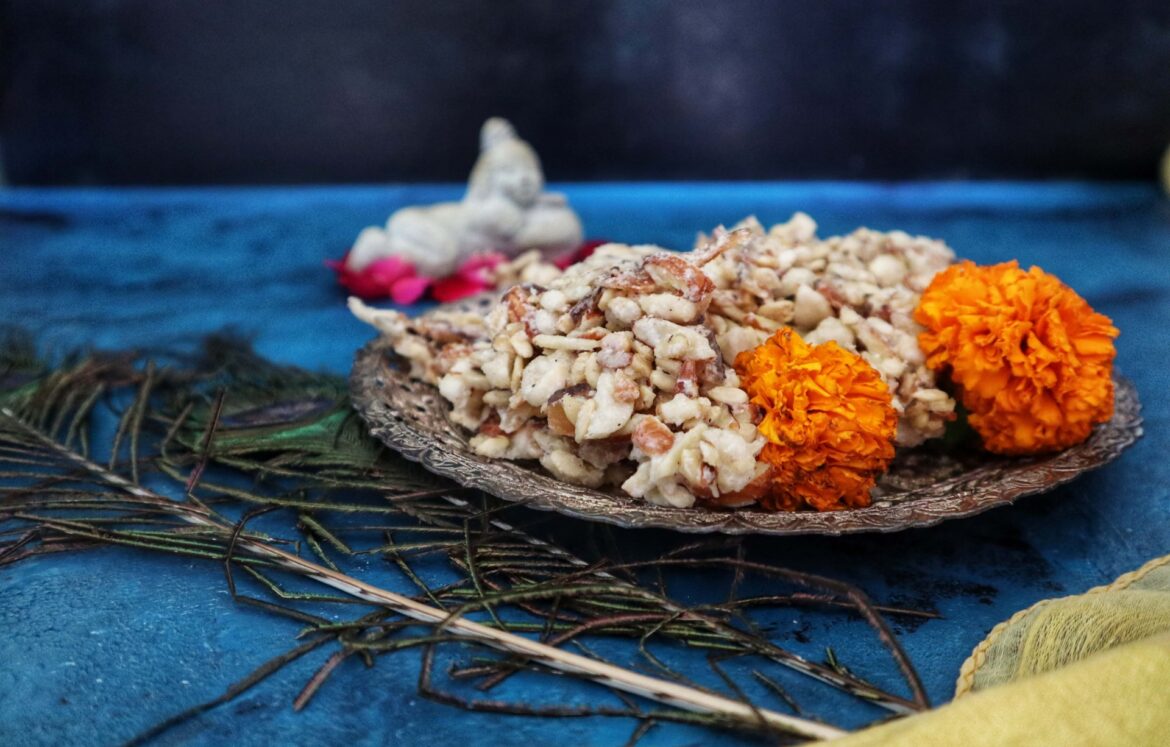
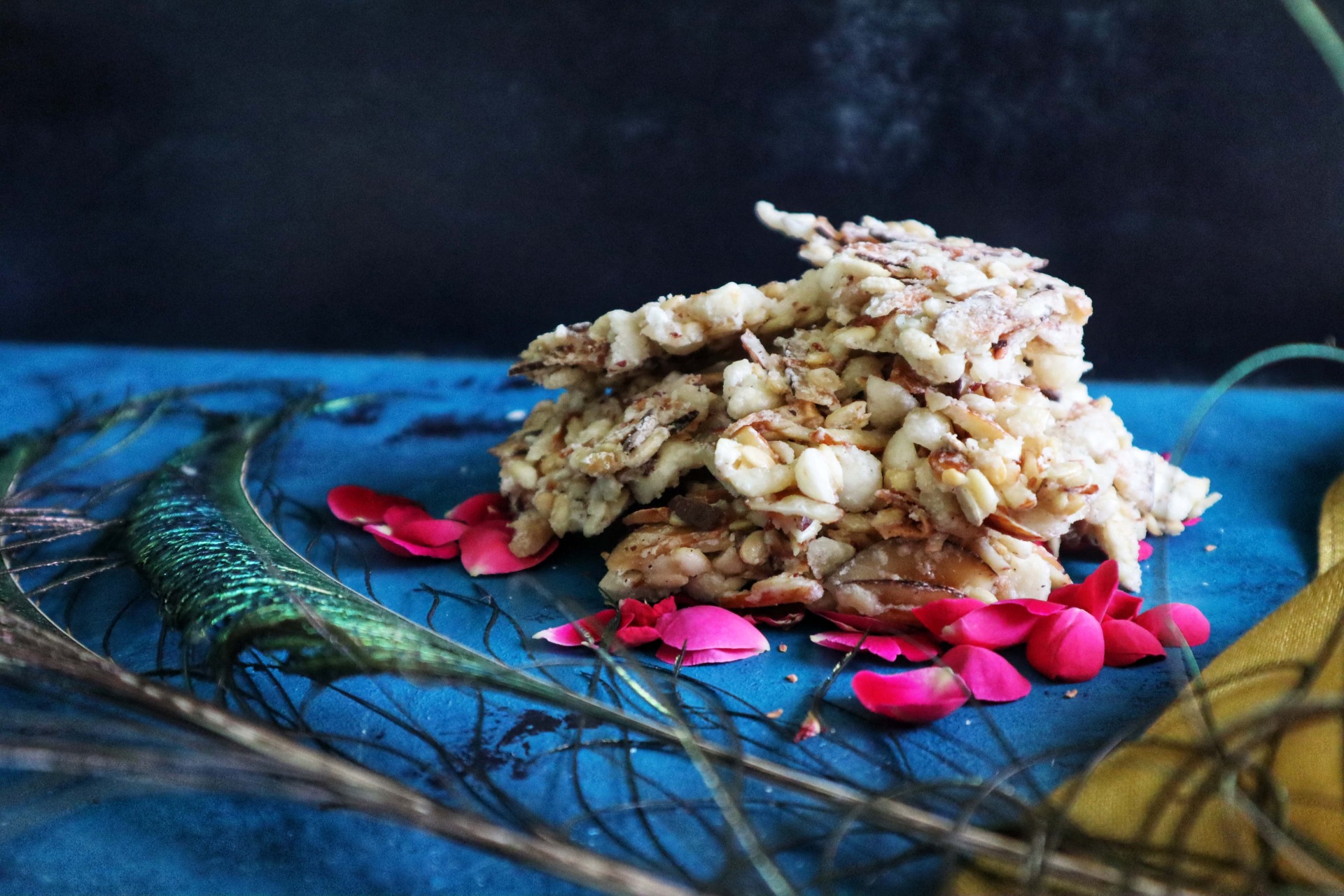
“Mewa here means dried fruits & nuts while the mawa (khoya) you’ve written is milk solid used to make Indian sweets,” she said, explaining that mewe ka paag could loosely be translated into ‘dried fruits & nuts barks’.
Mewe ka paag, said aunty, is among the dishes that have always been made at her home for Janmashtami. Easy to make, healthy and with a long shelf life, mewe ka paag is significantly made as an offering to Devaki, Krishna’s mother. “The dried fruits and nuts are rich in natural oils and nutrients making them the perfect food supplement for new mothers,” said aunty, explaining the significance.
For those who have been caught unaware, Lord Krishna Janmashtami also known as Janmashtami or Gokulashtami is a Hindu festival celebrating the birth of Lord Krishna. Marked with much fervour over a period of two days, celebrations include devotional singing and dancing well into midnight – the hour Krishna is believed to have been born – and some rituals the next day.
On that note, here’s the recipe for mewe ka paag. I’ve made the paag using a selection of dried fruits/nuts/seeds of my preference. Feel free to try different combinations. Don’t skimp on the use of ghee or sugar syrup. You can try replacing sugar with jaggery and use the same method to make health bars to tide you through snack cravings.
As an alternate, you can also try the Bengali milk & rice pudding ‘payesh‘ – check out the recipes for chhana payesh and khejur gur payesh in Payesh & Goodwill to Usher in the New Year. And if it’s something a tad bit different that you are looking for, then the water chestnut pudding written about in Devotion, Prayers and Water Chestnut Halva should be perfect for the taste buds.
Do tell me what you think about this recipe in the comment section below. To stay updated on new recipes, follow me on Instagram, Facebook and Pinterest. You could also subscribe and be a part of the mailing list.