
Muri Ghonto | Fish Head & Rice Pilaf
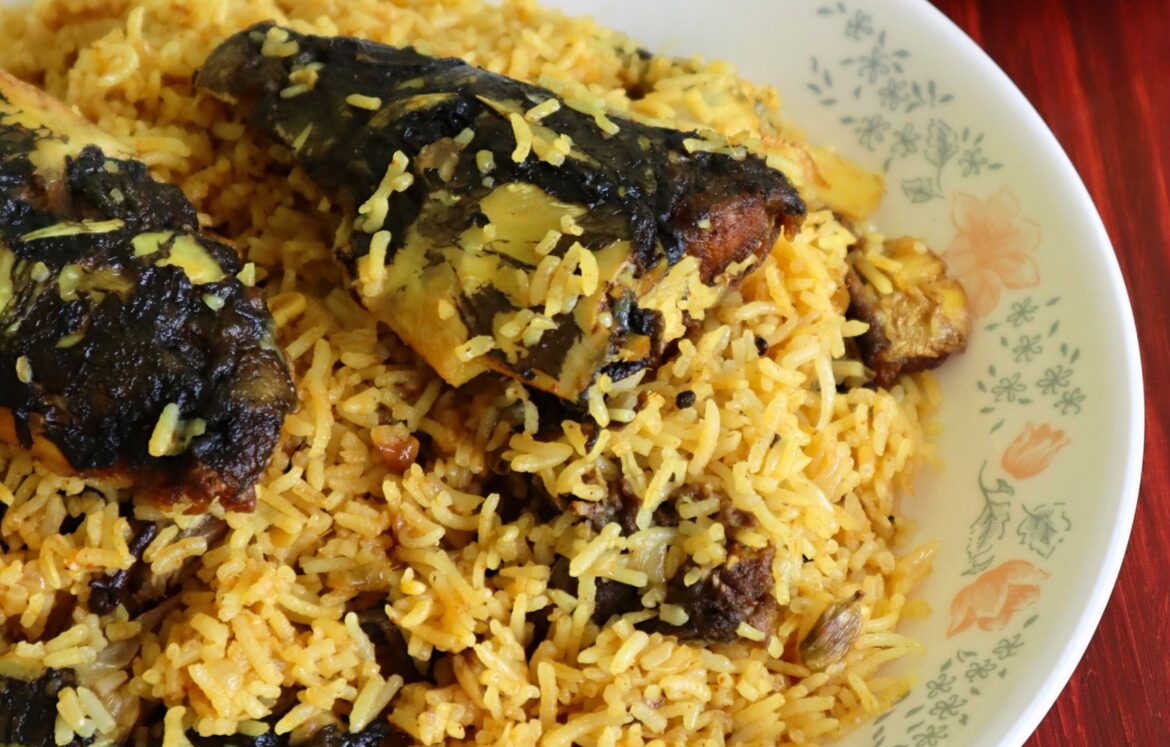
One of the best parts of cooking is trying to find a way where there is zero or minimal waste of produce. It’s heartening to watch even cookery shows placing emphasis on the concept of zero-waste in an attempt to turn it back into norm rather than a trend. And I am well aware that I used the term ‘turn it back into a norm’. Over the years, I’ve seen my mother practice the same thought process that she has learned from her mother.
For instance, the skin of the bottle gourd does not land in the washbasin. It is washed well and fried till slightly crisp, making it a perfect accompaniment with daal bhaat (rice & lentils). The stems of cauliflowers and leafy greens like spinach are used in chochodi (mixed vegetables). The bones of mutton/lamb, if not used in the curry, are utilised to make soup. And we use the entire banana tree! The leaves are used as plates, the fruits are eaten, and the flowers are used to make a vegetable as is the fleshy part of the tree’s trunk.

The muri ghonto is another such dish that uses a part of the whole fish that is generally not taken home by people. I always remember my father bringing home a whole fish, from the head to the tail. A second round of cleaning at home ensues before the fish pieces are seasoned with salt and turmeric. Then, calculating the number of people in the household, Maa divides the pieces into containers which are then stashed in the freezer until further use. If the fish, however, is a Catla or Rohu, the fish heads are kept in a separate container with a big chunk of fish. Because this fish head is used to make the muri ghonto – fish head mishmash in rice.
A favourite of the elder sister and her husband, this fish head and rice mishmash has even travelled from Ahmedabad to Kolkata with us by flight! Such is the love for this indulgent dish that seems a bit daunting when you see the time but is actually pretty easy to make and light on the stomach. As is the case with most food, the fish-head-rice is made in different ways by different people. You can add fried potatoes, green peas, nuts and raisins to enhance the flavour of the dish. The cooking medium can be ghee, vegetable oil or mustard oil, whatever tantalises your palate.
However, I would advise caution while frying the fish headpieces. As it fries, fish tends to stick to the pan – to avoid this, add a pinch of salt to the oil. Whilst cooking, water from the fish seeps into the oil causing it to splutter. Keep children out of the kitchen and be careful while you cook – I ended up being splattered with hot oil and had to hand over the reins to my mother for a while as I attended to the burns.
Remember these little tips and you are ready to roll! Do let me know if you follow this recipe and make the muri ghonto at home. Share your experiences in the comment section or on Instagram, Facebook and Pinterest. You could also subscribe and be a part of the mailing list for regular updates. Until then, happy cooking and eating!
